

 See My Latest Article on HelloNation

STEM education brings together science, technology, engineering, and mathematics to help students understand how the world works and how to solve problems within it. Rather than treating each subject as completely separate, STEM learning often connects them through investigations, design challenges, data analysis, experiments, and real-world projects.
For families in Western Arkansas, STEM education can be useful well beyond preparation for a particular career. It supports practical reasoning, creativity, communication, and the ability to make informed decisions about everyday challenges.
What does STEM stand for?
STEM is an acronym for:
- Science: Understanding the natural world through observation, testing, and evidence.
- Technology: Using tools, systems, and digital resources to solve problems or complete tasks.
- Engineering: Designing, building, testing, and improving solutions.
- Mathematics: Using numbers, patterns, measurements, data, and logical relationships to understand problems.
A STEM lesson does not always involve advanced equipment or computer programming. Measuring rainfall, comparing insulation materials, designing a model bridge, tracking household energy use, or studying how soil affects plant growth can all involve STEM thinking.
The central idea is not simply learning more facts. Students practice asking questions, evaluating evidence, making predictions, testing ideas, and revising their work when the results do not match their expectations.
How is STEM education different from traditional subject instruction?
STEM education often emphasizes connections among subjects and the process of solving a problem. A traditional science lesson might focus on learning how erosion works. A STEM project could ask students to design a way to reduce soil loss after heavy rain, then test different materials and compare the results.
This approach may include several steps:
1. Define a question or problem.
2. Research what is already known.
3. Propose a possible solution.
4. Build or model the idea.
5. Test it using observations or measurements.
6. Analyze the results.
7. Improve the design.
There may not be one perfect answer. Students can learn from an unsuccessful test if they can explain what happened and identify what they would change.
STEM also differs from a narrow definition of technology education. Using a tablet or computer is not automatically STEM learning. The educational value comes from how the tool is used—for example, to collect data, create a model, program a device, or communicate evidence-based findings.
Why is STEM education important for children and teenagers?
STEM learning develops skills that apply across school subjects and daily life. Students practice breaking complex tasks into smaller parts, recognizing patterns, and supporting conclusions with evidence.
Important benefits include:
Problem-solving
Students learn to approach challenges systematically instead of guessing at random. They can compare options, identify constraints, and make changes based on results.
Critical thinking
STEM activities encourage students to ask whether information is reliable, whether a conclusion is supported by evidence, and whether another explanation is possible.
Creativity
Engineering and design projects require imagination. Students may develop several possible solutions and decide which one best fits the materials, time, cost, or safety requirements.
Communication
Explaining a design, recording results, writing a procedure, or presenting data helps students communicate technical ideas clearly.
Persistence
Experiments and prototypes often fail on the first attempt. Students learn that revision is a normal part of learning rather than proof that they are incapable.
Quantitative literacy
Understanding measurements, charts, percentages, scale, and probability helps people interpret information related to budgets, weather, health, transportation, utilities, and public decisions.
What might STEM learning look like at home?
STEM education does not require a dedicated laboratory. Everyday activities can provide opportunities for observation, measurement, and design.
Families might:
- Track outdoor temperature and rainfall, then compare patterns over several weeks.
- Test which materials keep water warm or cold for the longest period.
- Measure the amount of water used during common household activities.
- Build a small structure from paper, cardboard, or recycled materials and test its strength.
- Plan a container garden by considering sunlight, soil, spacing, and water needs.
- Use maps and measurements to estimate walking distances or compare routes.
- Ask children to explain how an appliance, heating system, drainage feature, or vehicle solves a practical problem.
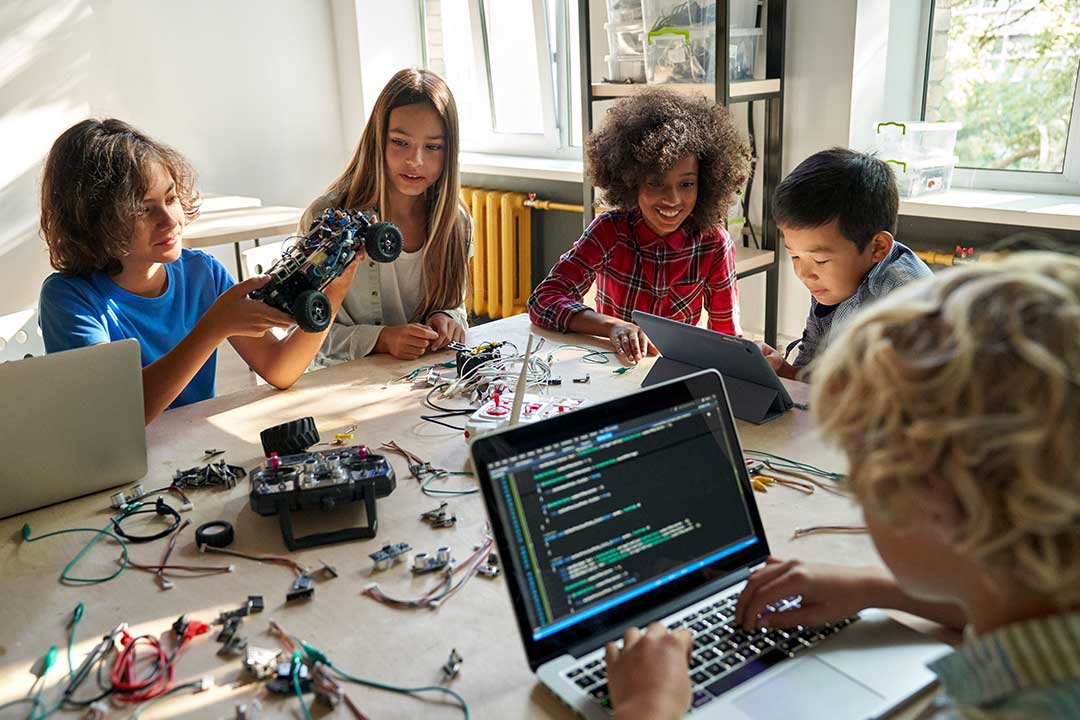
Seasonal weather and changing outdoor conditions in Western Arkansas can create especially accessible examples. Heavy rainfall, summer heat, soil movement, plant growth, and household energy use all provide questions that can be explored with simple observations and careful recordkeeping.
The goal is not to turn every family activity into a formal lesson. Short questions—“What do you predict?” “How could this be tested?” and “What changed?”—can encourage scientific and mathematical thinking.
Does STEM education only prepare students for technical careers?
No. STEM education can support students who eventually work in science, health care, construction, manufacturing, information technology, education, environmental fields, or engineering. However, its value is broader than a list of occupations.
Most adults encounter situations that require comparing information, estimating costs, understanding measurements, evaluating risks, or deciding whether a claim is supported by evidence. These skills matter in offices, homes, public service, skilled trades, creative work, and community life.
STEM learning also benefits students who do not initially consider themselves “math people” or “science people.” A project-based activity may reveal strengths in organizing, drawing, explaining, building, researching, or collaborating. Different students may contribute in different ways to the same challenge.
What are common misconceptions about STEM?
Several misunderstandings can make STEM seem less accessible than it is.
STEM is only for high-achieving students.
Effective STEM activities allow students to begin at different levels and improve through practice. Curiosity and willingness to investigate are more important starting points than having every answer immediately.
STEM requires expensive equipment.
Many useful activities rely on paper, household objects, measuring tools, recycled materials, or outdoor observations. More advanced equipment can expand learning but is not required for the basic process.
STEM means working alone with computers.
Many STEM projects involve discussion, teamwork, writing, drawing, construction, and presentation. Collaboration is often essential because real-world problems rarely fit within one subject or one person’s expertise.
STEM is separate from reading and the arts.
Students must read instructions, research background information, write explanations, interpret language, and present conclusions. Design also involves visual communication, creativity, and attention to human needs.
How can families recognize meaningful STEM instruction?
A strong STEM activity usually asks students to do more than recall a definition. Useful signs include:
- Students investigate a question or problem.
- They make predictions or propose explanations.
- They collect, organize, or interpret information.
- They have an opportunity to test an idea.
- The activity allows revision or improvement.
- Students explain how they reached a conclusion.
- The teacher values reasoning, not just the final result.
A project does not need to be elaborate to be effective. A carefully planned investigation using ordinary materials may teach more than a complicated activity in which students simply follow steps without understanding why.
How can adults support STEM learning?
Adults can help by encouraging questions instead of immediately supplying answers. Asking a child to describe an observation, explain a prediction, or suggest a fair test builds reasoning skills.
It also helps to treat mistakes as information. If a structure collapses or a prediction is incorrect, the next question can be: “What did the result show?” This keeps the focus on learning and improvement.
Schools, libraries, community programs, and households may offer different forms of STEM exposure. The most useful experiences are those that connect ideas to genuine questions and give students time to think, test, revise, and explain.
STEM education is ultimately a way of learning how to understand problems and make thoughtful decisions. Its benefits reach beyond classrooms because the same habits—curiosity, evidence, measurement, creativity, and persistence—are useful throughout life.