

 See My Latest Article on HelloNation
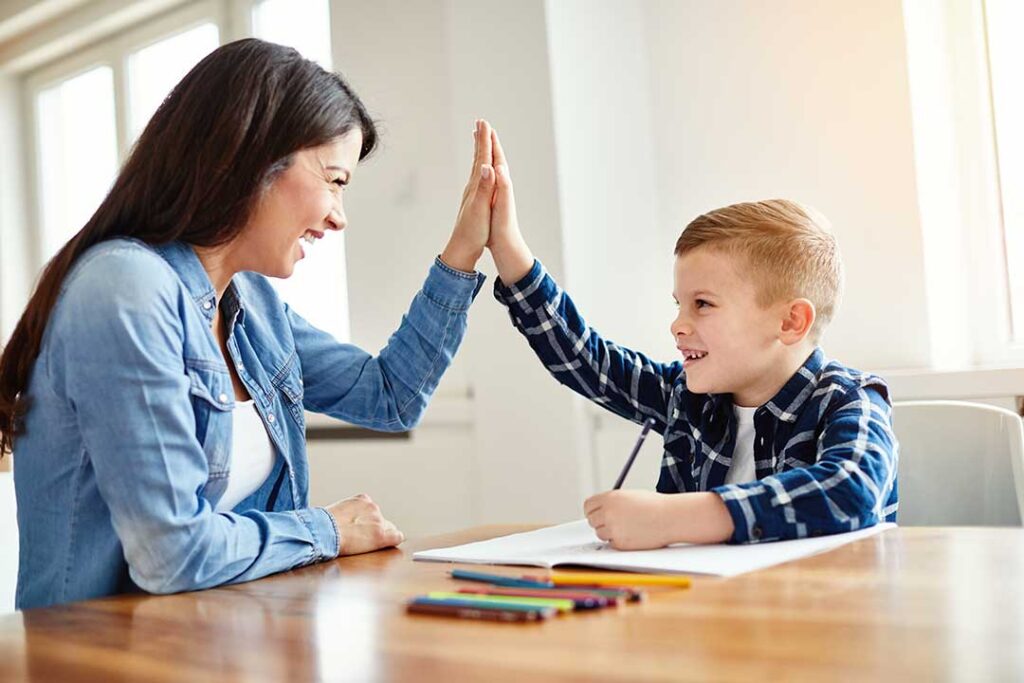
What does critical thinking look like in early childhood?
Critical thinking in young children is the ability to notice details, ask questions, compare ideas, make predictions, explain choices, and reconsider an answer when new information appears. It does not require advanced reading or formal lessons. A preschooler sorting buttons by size or explaining why a puddle disappeared is already practicing important reasoning skills.
For families in Western Arkansas, these skills can be developed through ordinary routines at home, in child care, and in early elementary classrooms. The goal is not to make children solve adult problems. It is to help them become curious, observant, flexible, and comfortable explaining how they reached an idea.
Why are critical thinking skills important for young learners?
Critical thinking helps children become more independent learners. Instead of waiting for an adult to provide every answer, children begin to investigate, test possibilities, and use evidence from what they see or experience.
These skills support many areas of development:
- Language: Children practice describing observations and explaining their thinking.
- Early mathematics: Sorting, counting, measuring, and recognizing patterns require comparison and reasoning.
- Science learning: Predictions and simple experiments help children connect actions with results.
- Social development: Children learn to consider another person’s viewpoint and resolve disagreements.
- Self-regulation: Thinking through choices can help children pause, plan, and respond more thoughtfully.
Critical thinking does not mean that children should question every rule or debate every instruction. Young learners still need clear limits and dependable routines. Reasoning develops best when adults provide structure while leaving room for curiosity.
How can adults encourage better questions?
Adults can strengthen thinking by responding to children’s questions with interest rather than immediately supplying an answer. A child who asks, “Why is the sky dark?” does not need a complete explanation of weather systems. A useful response might be, “What do you notice about the clouds?” or “What do you think may happen next?”
Helpful prompts include:
- “What makes you think that?”
- “How are these two things alike?”
- “What could we try next?”
- “What changed?”
- “Is there another way to solve it?”
- “What did you notice first?”
- “What would happen if we changed one part?”
These questions encourage children to explain, compare, and predict. They also show that learning is not limited to knowing the correct answer immediately.
Adults should allow enough quiet time for a response. Young children often need several seconds to organize their thoughts. Quickly rephrasing the question or answering for them can unintentionally teach them that speed matters more than careful thinking.
Which everyday activities build reasoning skills?
Many household activities naturally support critical thinking without requiring special materials. Cooking, for example, gives children opportunities to count ingredients, compare amounts, follow a sequence, and notice changes in texture or temperature. An adult can ask what might happen if an ingredient is added before another or how the mixture changed during preparation.
Other practical activities include:
Sorting and organizing
Children can sort socks, utensils, toys, leaves, or building pieces by color, shape, size, texture, or purpose. Afterward, ask whether the objects could be sorted in a different way. This helps children understand that one group can be organized according to more than one rule.
Building and designing
Blocks, cardboard, recycled containers, and other open-ended materials invite children to plan and revise. Ask what a structure needs to remain stable, which piece might work best, or what could be changed after part of the design falls.
Outdoor observation
Western Arkansas weather provides many changes to observe throughout the year, including wet ground after storms, shifting shadows, changing leaves, and differences in temperature. Children can compare what they see before and after rain, predict which areas will dry first, or investigate where insects and birds are most active.

Stories and picture books
Before reading the final page, ask children what they think will happen. Afterward, discuss whether the prediction matched the story and what clues helped. Questions about a character’s choice can also build perspective-taking: “Why might the character have done that?” or “What else could the character have tried?”
How can play strengthen critical thinking?
Play gives children a safe setting for testing ideas. During pretend play, children create rules, assign roles, solve conflicts, and adjust plans. A pretend store may involve deciding how to organize items, how many objects a customer can buy, or what to do when the play money runs out.
Games with simple rules can also support planning and flexible thinking. Matching games, puzzles, building challenges, and board games encourage children to remember information, consider choices, and manage disappointment. Adults can focus less on winning and more on the thinking process by asking, “What choice did you make?” or “What might you try on your next turn?”
Open-ended play is especially valuable because there may be several reasonable solutions. If a child uses a block as a telephone or turns a blanket into a tent, the adult can follow the child’s idea instead of correcting it toward a predetermined result.
What should adults avoid?
Too much correction can make children hesitant to share ideas. Critical thinking grows when children are allowed to make safe mistakes and revise their approach. If a tower falls, saying “You were wrong” is less useful than asking, “What do you notice about the way it fell?”
Adults should also avoid praising only correct answers. Process-focused responses are more helpful:
- “You tried two different ways.”
- “You noticed that the heavier piece changed the balance.”
- “You used clues from the story to make that prediction.”
- “You changed your plan after you saw what happened.”
Another common misconception is that critical thinking must look serious or academic. Young children may be reasoning while making up a game, comparing rocks, arranging stuffed animals, or deciding how to carry several objects at once.
How can families support thinking during screens and media?
Children benefit from discussing media rather than only watching it. During or after a program, adults can ask what happened first, whether a character made a helpful choice, or how the story might change with a different ending.
For older preschoolers and early elementary children, adults can also discuss whether a picture, claim, or online video seems realistic. The conversation should remain simple and age-appropriate. The purpose is to teach children that information can be examined rather than accepted automatically.
Screens should not replace conversation, hands-on play, movement, or direct observation. A short discussion connected to a child’s interests is often more valuable than a long lesson.
When should families seek additional support?
Children develop reasoning skills at different rates. Occasional frustration, unusual answers, or reluctance to speak does not necessarily indicate a problem. However, families may want to discuss concerns with the child’s teacher or pediatric health professional if a child consistently struggles to understand simple questions, communicate basic ideas, follow familiar sequences, or participate in age-appropriate play.
Support is most effective when adults share specific observations rather than broad labels. Describing what the child does, when it happens, and what strategies have helped gives educators and health professionals clearer information.
Critical thinking begins with ordinary experiences: a question at the kitchen table, a puzzle that needs another approach, a cloud that changes shape, or a story with an unexpected ending. With patient conversation and room to experiment, young children learn that their observations matter and that good thinking often includes asking what else might be possible.